Carbon

We have been researching carbon materials since the 1990s. What follows are some highlights of this work, and especially recent work on amorphous carbon, and accurate dynamical simulation of graphitization and carbonization processes. Click on the images below for more information.

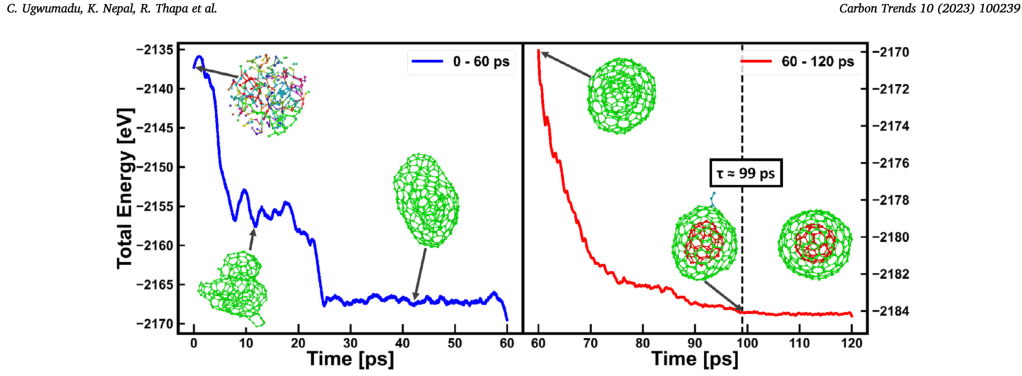
Formation of multi-layer fullerenes (Bucky onions) from random initial conditions
The formation of multi-layer fullerenes or “Bucky onions” starting from random initial conditions and employing a DFT-level (Machine Learning) interatomic potential.
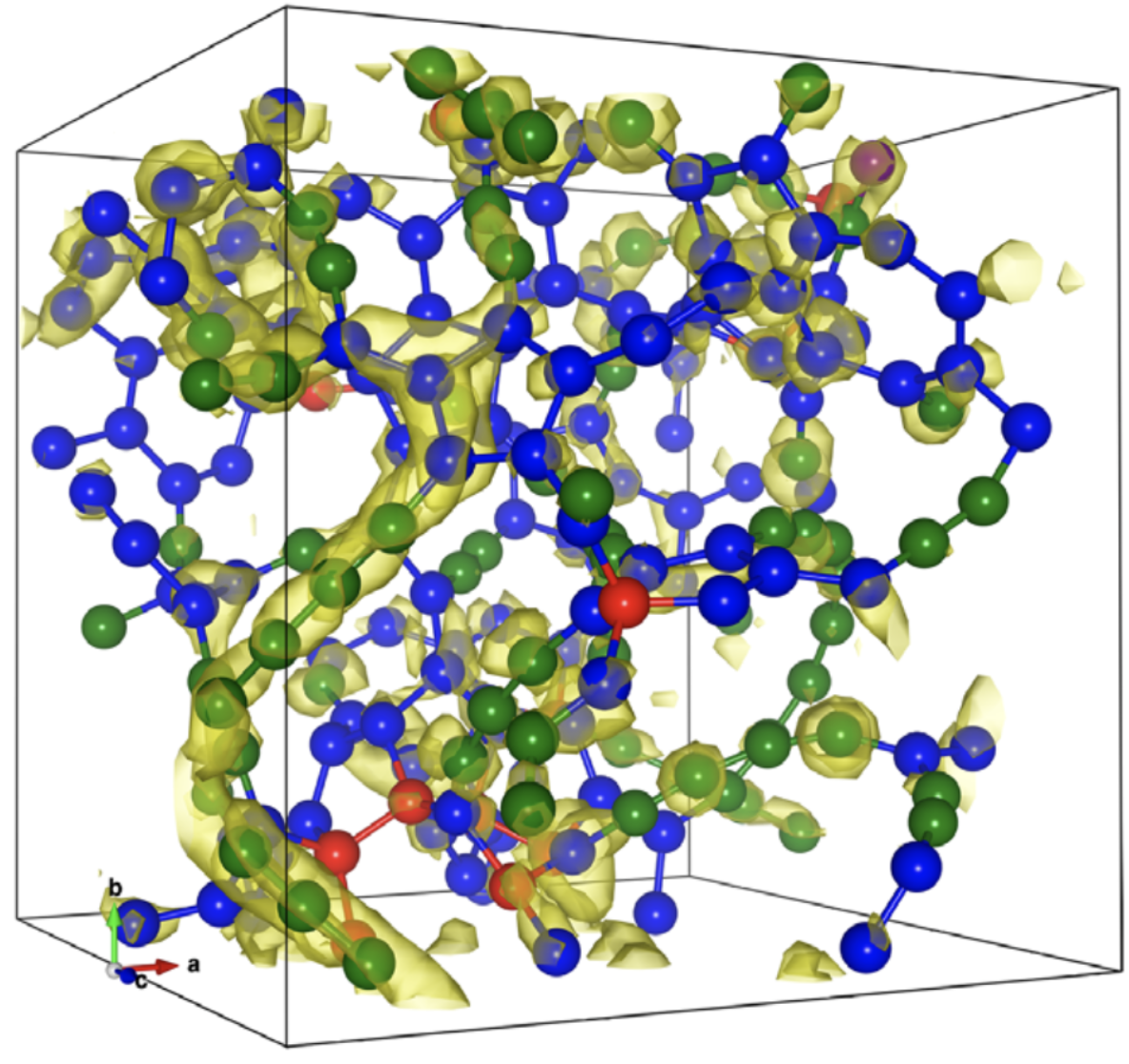
Electronic conduction paths in low density amorphous carbon
Electronic conduction paths in low density amorphous carbon.
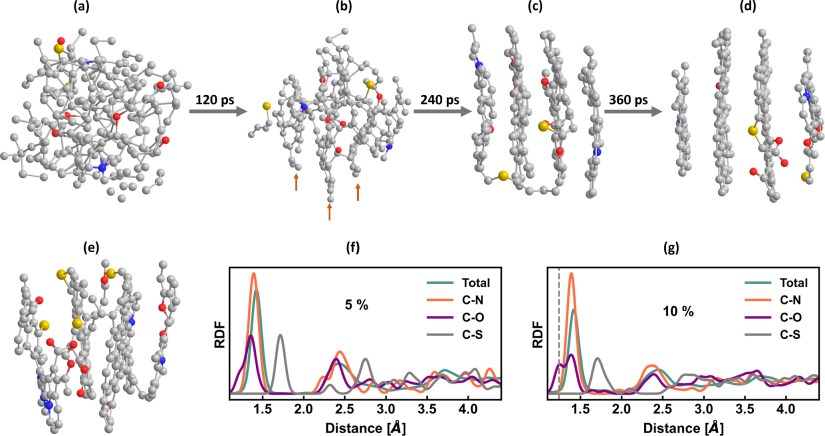
Formation of amorphous graphite from a random starting conformation
The formation of amorphous graphite from random starting conformation (density 2.44 gm/cc).
Video of graphite formation in 1000-atom model with GAP potential.
One layer of amorphous graphite
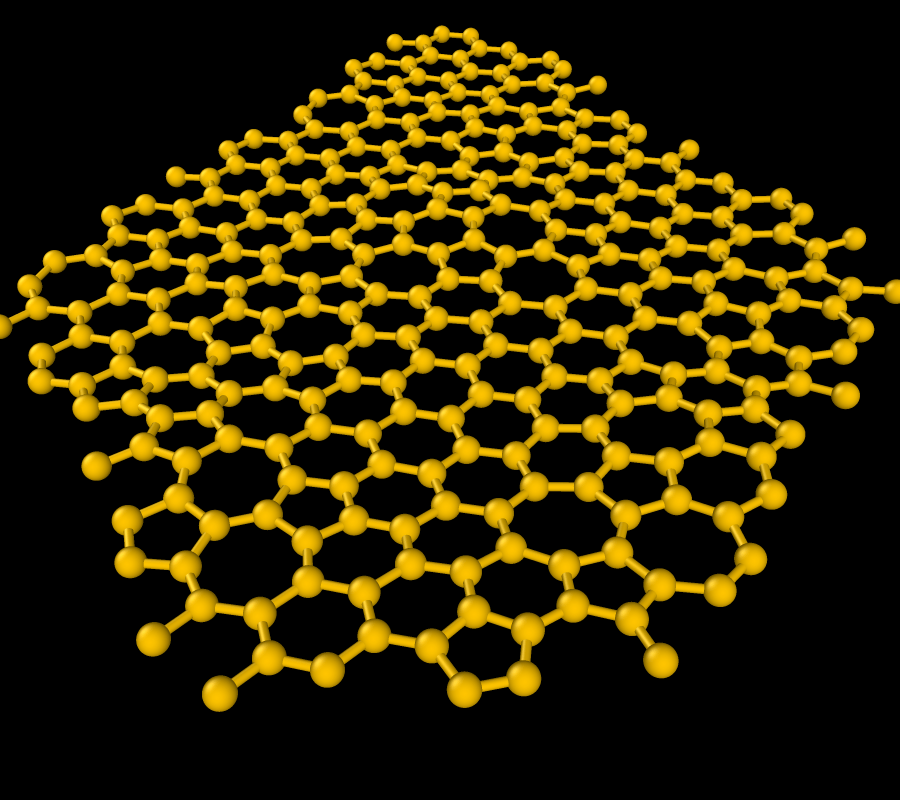
One layer of amorphous graphite (e.g., amorphous graphene)
Model of amorphous graphene with puckering at pentagonal sites
First realistic model of amorphous graphene, note puckering at pentagonal sites.
Amorphous carbon across several densities
Amorphous carbon across several densities, using a joint DFT and information-based approach “FEAR”.
Three-dimensional warped and wrapped amorphous graphene
Three-dimensional warped and wrapped amorphous graphene.
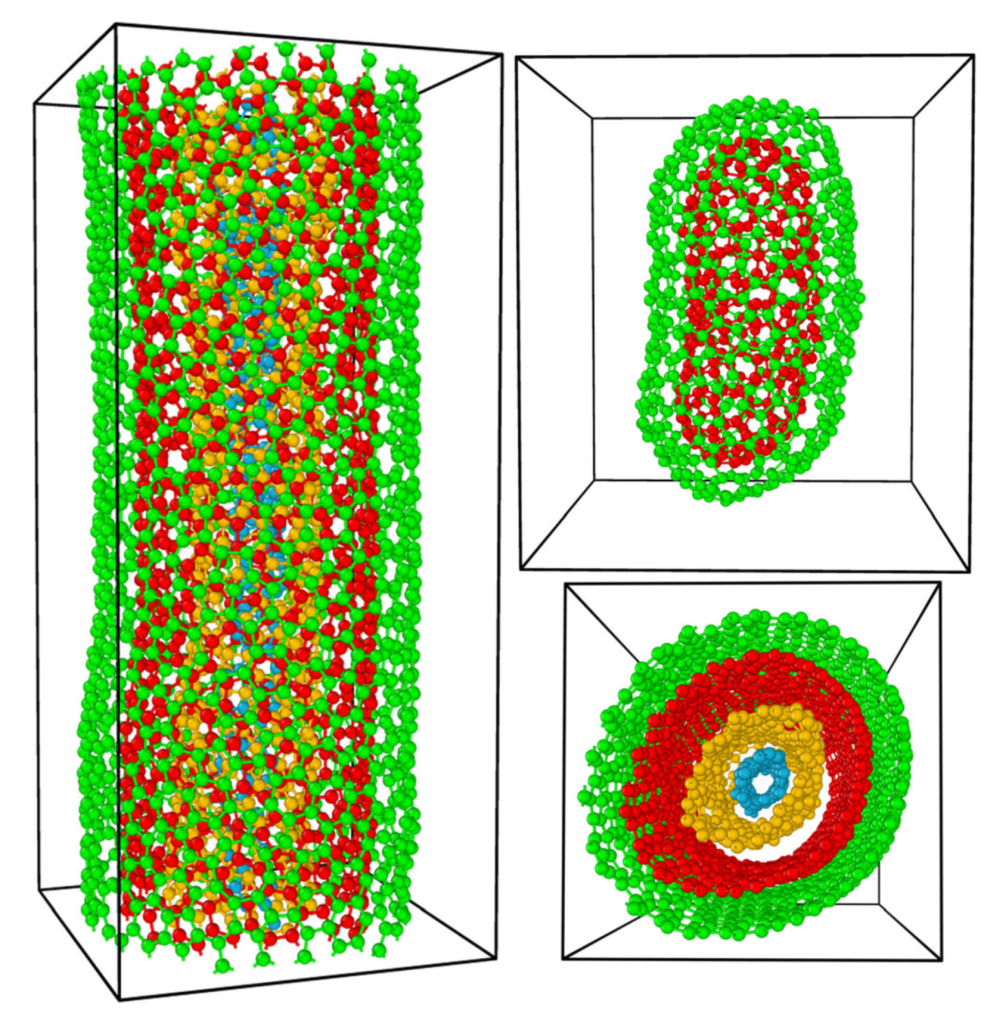
Multiwall carbon nanotubes and nanocapsule formed from random initial conformations
Multiwall carbon nanotubes and nanocapsule starting from random initial conformations
A charming (?) 1990 animation of silicon and carbon molecules and materials using “FIREBALL”, a pioneering local orbital density functional code. In the last 30 seconds I accidentally discover amorphous graphene by simulating a 2d liquid and rapidly quenching it, note the formation of various rings. Acknowledgement to O. F. Sankey and S. Klemm.
Our Ohio University YouTube channel: Dynamical processes in carbon and coal: carbonization of coal, graphitization of carbon and coal materials, and vibrational modes for these materials.